


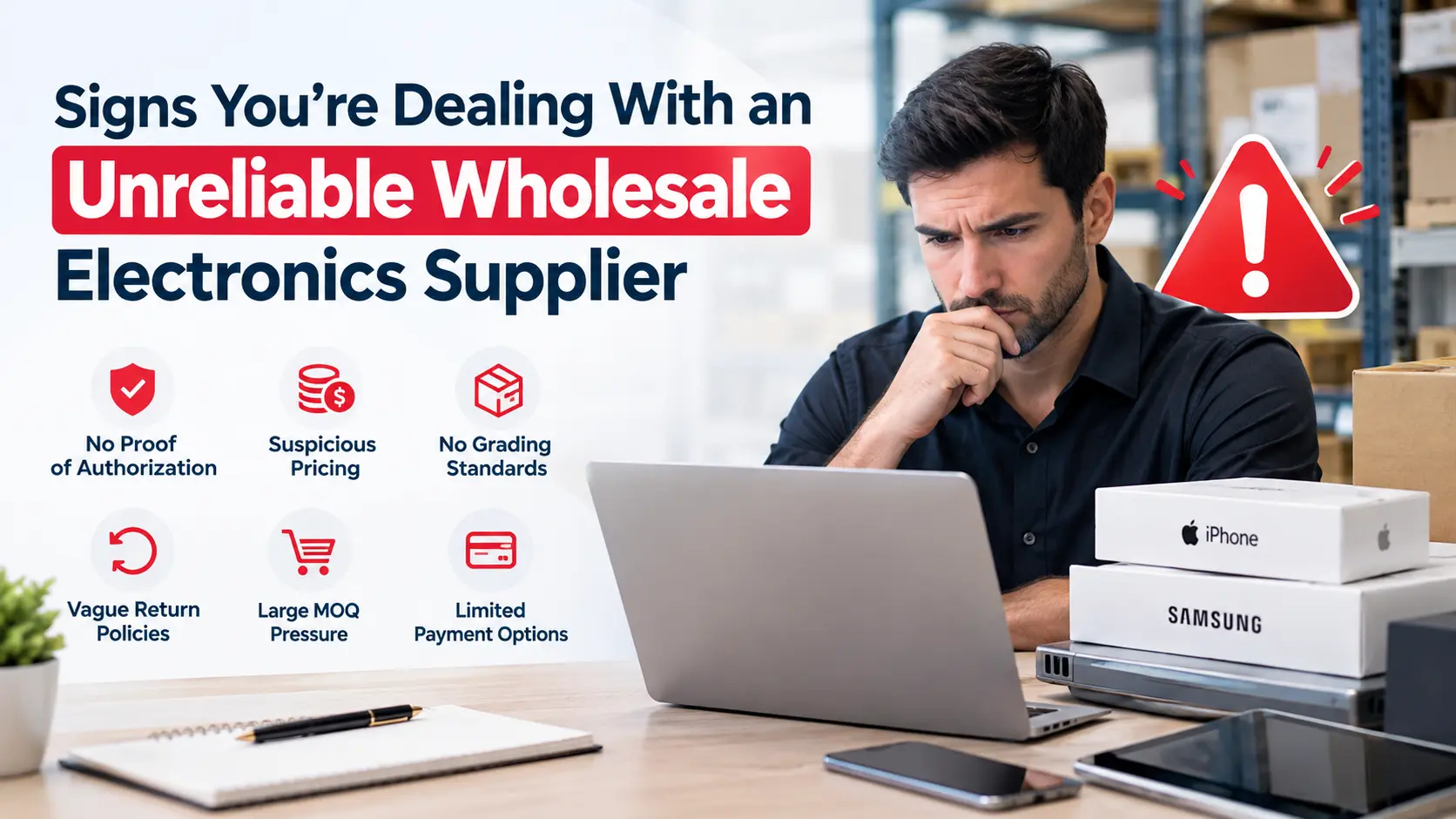
Signs You’re Dealing With an Unreliable Wholesale Electronics Supplier
Finding the right wholesale supplier can make or break your reselling business. Pick the wrong one, and you’re stuck with counterfeit stock, blown warranties, or a partner who disappears the moment something goes wrong. Before you sign a deal or place a bulk order, here’s what should make you pause.
They Won’t Prove Authorization
Ask any legitimate distributor if they’re authorized to sell a brand, and they’ll show you proof without hesitation. A supplier who dodges the question, gives vague answers, or gets defensive is telling you something. Real authorized distributors have documentation, brand partnerships, and a track record you can verify with the manufacturer directly.
If a supplier claims to sell “genuine Samsung” or “authentic Apple” stock but can’t name their supply chain, walk away. Grey market goods often look identical to authorized stock until the warranty claim gets denied.
Prices That Don’t Add Up
Everyone wants a good deal, but there’s a line between competitive pricing and prices that make no business sense. If a supplier is offering flagship phones at 40% below what every other distributor charges, ask yourself how that’s possible. Usually it means one of three things: the devices are stolen, refurbished units sold as new, or counterfeit.
Real wholesale pricing follows market logic. Brands set minimum advertised prices for a reason, and distributors working within official channels can’t undercut those numbers by huge margins and still stay in business.
No Grading Standards for Used or Refurbished Stock
If you’re buying anything other than brand-new sealed inventory, grading matters. A trustworthy supplier tells you exactly what “Grade A” or “Grade B” means for their inventory — screen condition, battery health, cosmetic wear, functional testing. Vague terms like “good condition” without a defined standard leave too much room for disappointment when the shipment arrives.
Ask for their grading criteria in writing. If they can’t provide one, assume the worst and buy elsewhere.
Return and RMA Policies That Are Vague or Nonexistent
Devices fail. That’s just the reality of electronics distribution, no matter how careful the supplier is. What separates a reliable partner from a risky one is how they handle it when something goes wrong.
Before committing to an order, ask specific questions: What’s the RMA window? Who covers shipping on a defective unit? How long does a replacement or refund actually take? A supplier who hedges on these answers, or buries the policy in fine print, is setting you up for a bad experience down the line.
Minimum Order Quantities That Feel Like a Trap
Bulk pricing naturally comes with order minimums, and that’s normal. The red flag shows up when a supplier pressures you into quantities far beyond what makes sense for your business, especially before you’ve tested the relationship with a smaller order.
A good distributor works with you to scale gradually. One pushing you toward a massive first order, with little flexibility and heavy pressure, is often more interested in closing a sale than building a long-term partnership.
Payment Terms That Only Protect Them
Wire transfer only, full payment upfront, no invoice, no contract — these are all signs worth noticing. Established distributors typically offer multiple payment options and clear documentation for every transaction. When a supplier insists on payment methods that are hard to trace or dispute, and refuses standard business paperwork, that’s not a coincidence.
No Real Presence or Reviews
A quick search should turn up more than a bare-bones website. Look for how long the company has been operating, whether other resellers mention them, and if they have any verifiable business history. Suppliers with no digital footprint, no client testimonials, and no way to confirm they’re a functioning business are a gamble you don’t need to take.
Communication Goes Quiet After the Sale
Pay attention to how responsive a supplier is before you buy versus after. Some suppliers are fast and attentive during the sales process, then go silent once the payment clears. Test this early — ask a detailed question before placing your first order and see how they handle it. Their response speed and thoroughness now is a preview of what support will look like later.
FAQs-FAQs About Choosing a Wholesale Electronics Supplier
1.How can I verify if a supplier is an authorized distributor?
Contact the brand directly, or check the manufacturer’s official distributor list if one is published. Most brands can confirm authorized partners over email or phone.
2.Is it normal for wholesale prices to vary between suppliers?
Yes, some variation is expected based on volume, region, and relationship with the brand. What’s not normal is a price so far below market average that it can’t be explained by legitimate business factors.
3.What’s a reasonable RMA rate to expect from a good distributor?
Industry-leading distributors typically keep RMA rates under 1-2%. Anything significantly higher suggests quality control issues in their supply chain.
4.Should I always ask for a sample order first?
Where possible, yes. A smaller trial order lets you evaluate product quality, packaging, and how the supplier handles the transaction before committing to a larger purchase.